
Name-Based Case Searches
Xchange is the gateway to public Utah District and Justice Court case information. Pick a jurisdiction first. Decide between all cases and judgments entered. Then narrow the docket search to Davis County or the known court. Spelling counts here. The name must match what was filed originally, though the official help allows an asterisk wildcard, so John* can surface first-name variants an exact guess would miss.
- Choose District Court, Justice Court, or both, then select the narrowest Davis location.
- Use “all court cases” unless the request is only for judgments.
- Enter the filed last name or company and a first-name wildcard when useful.
- Add case type or a filing-date range to reduce unrelated results.
- Open the matching case history and verify the court, date, type, and party role.
The official Xchange help page walks through every control. Its interface also shows why tight criteria matter before a billable docket search.
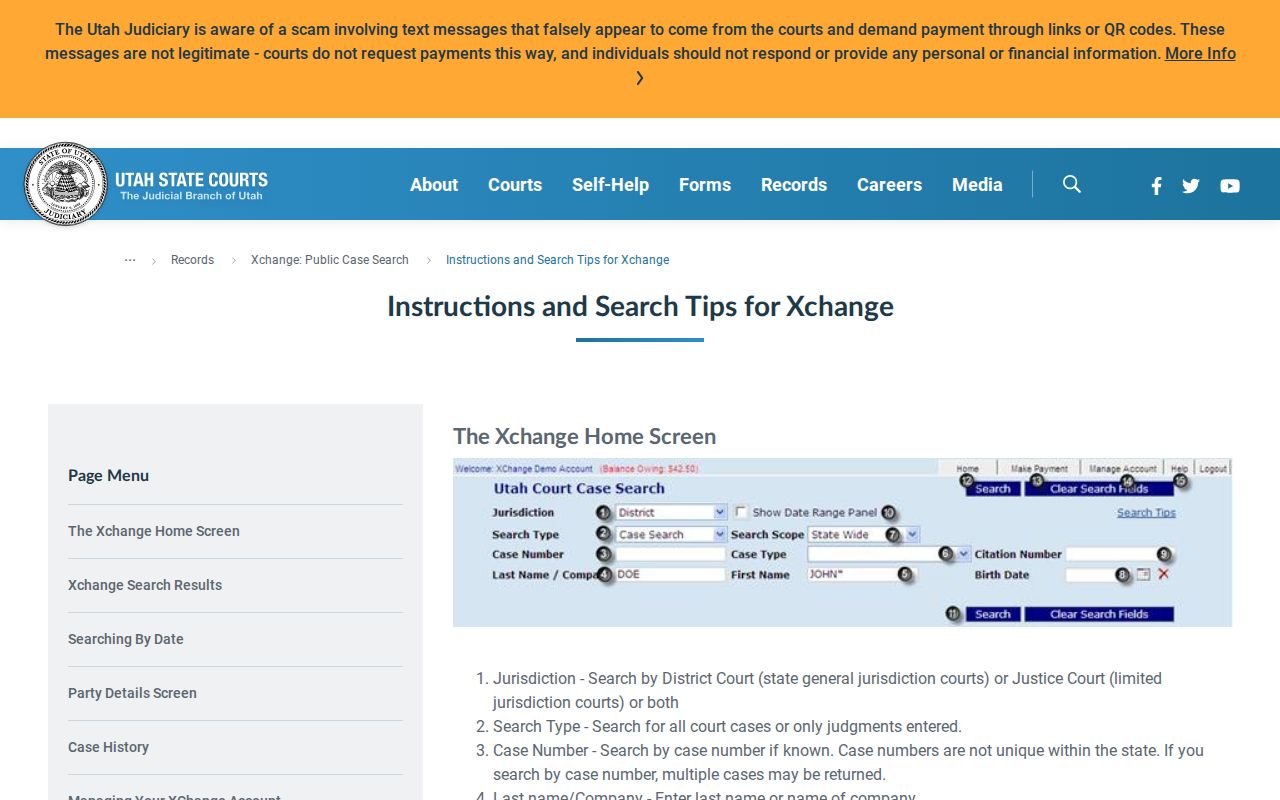
The help fields separate a case number from a citation number. They also explain the links inside each docket result.
Davis County Docket Search Fields
The Davis County docket search form runs from jurisdiction and search type down to identifiers and narrowing controls. One valid criterion is the minimum. A birth date can separate common names in court records, though private birth details belong nowhere near a public research note.
| Field | Control | Use |
|---|---|---|
| Jurisdiction | Dropdown | District, Justice, or both |
| Search Type | Dropdown | All cases or judgments entered |
| Case Number | Text | Enter every known character |
| Last Name/Company | Text | Use the original filed spelling |
| First Name | Text | Wildcard is supported |
| Case Type | Dropdown | Narrow by official code |
| Search Scope | Selector | Statewide, county, or court |
| Citation Number/Location | Text and dropdown | Pair a citation with its court location |
| Date Range Panel | Expandable controls | Filing, disposition, judgment, or satisfaction dates |
The manifest's official search-form source shows those options together.
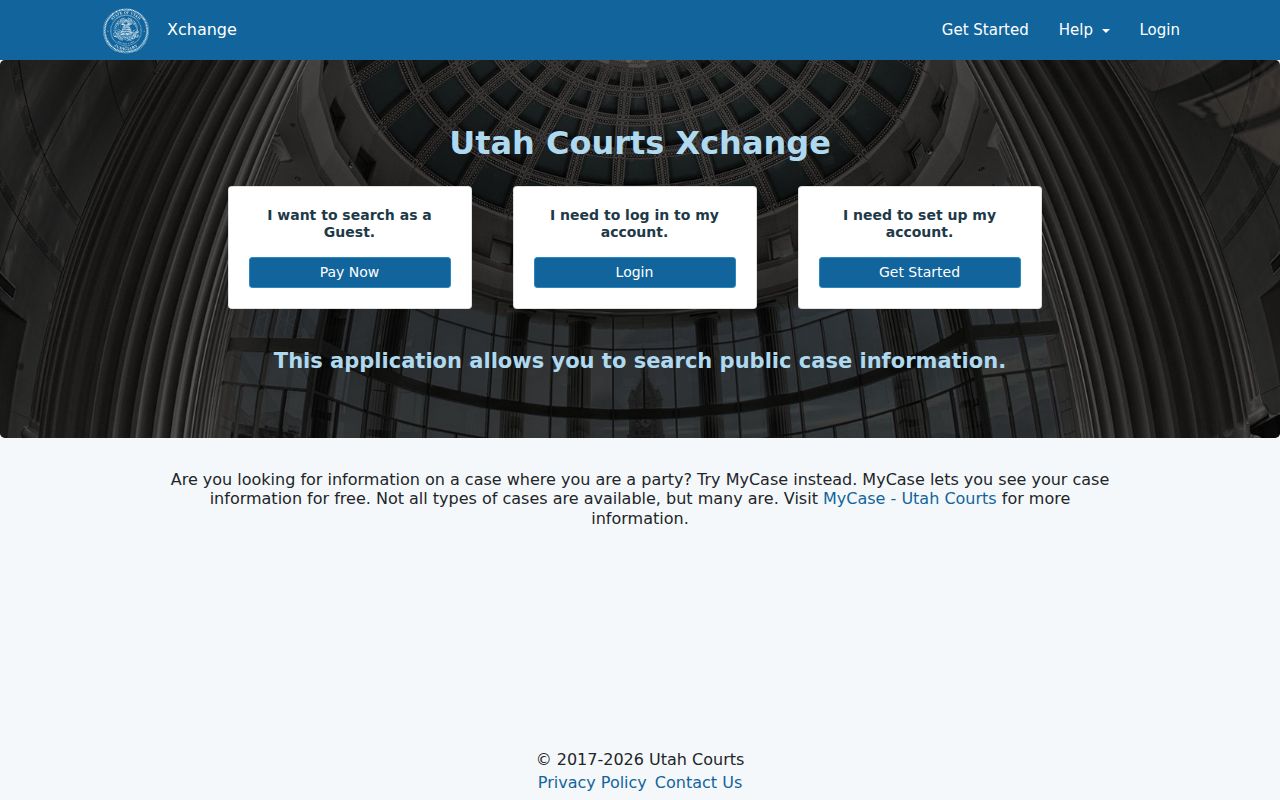
When one name fills many Utah court records, the court and scope controls cut the noise fast.
Case Number Searches
A full case number is usually the sharpest path into a docket. Utah warns, though, that case numbers are not unique statewide. So keep the court location beside the number. The first two digits typically mark the filing year. The official case type adds context. Never invent missing digits or push a civil number through a criminal filter.
A citation number is a different animal. Searching one means selecting the citation location printed on the ticket. Note that a Traffic Citation record can differ from a Traffic Court Case. A contest, a failure to appear, or a warrant event creates the case. Check the case type before saving the result.
Keep three facts together: case or citation number, exact court location, and case type. That small set prevents many false matches.
Davis County Docket Search Limits
Xchange caps results at 500. A common name run statewide can bury the useful match inside that overbroad set. Narrow the jurisdiction to District or Justice Court. Select Davis County or the actual court. Add a case type only when known, and set a relevant date range.
Docket searches are paid under current Xchange terms. The present Utah fee rule lists a one-time transaction at $10 for up to ten searches in a session. Monthly access has setup and search tiers. Read the live checkout controls before paying. Older help or registration text may show a prior amount. The guest registration and payment entry lays out the path for a one-time user.
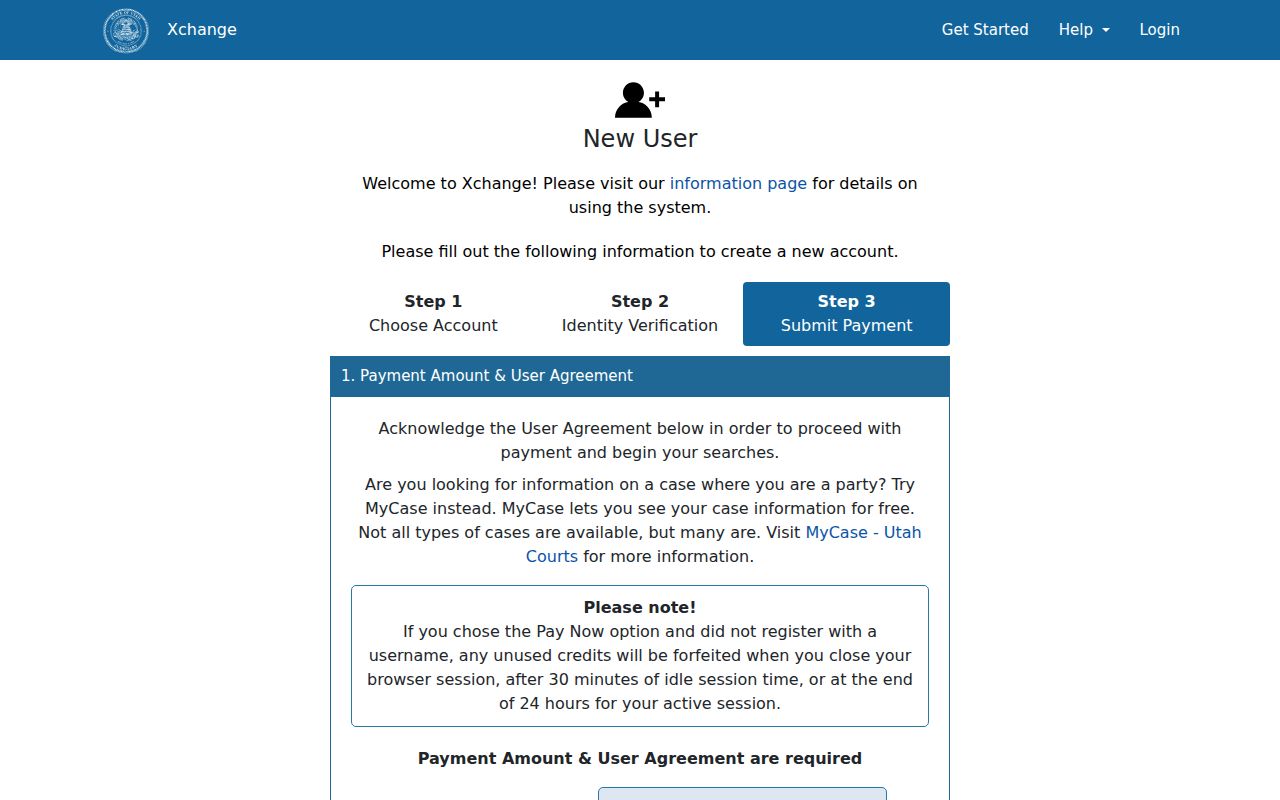
Guest access pays for public searches. It does not grant party-only or nonpublic access.
Case Search Results Explained
A matching Davis County case opens into a case history. That display can identify the court and case number. It also covers type, filing date, public parties and roles, attorneys, judge, and proceedings. Criminal histories add charges, pleas, and disposition data. Civil histories add complaints, motions, judgments, decrees, and satisfaction events. Financial summaries and document links may appear where applicable.
| Case identity | Court, location, number, type, style, and filing date. |
|---|---|
| Participants | Public party roles, counsel, judge, and relevant agencies. |
| Case history | Dated filings, hearings, minute entries, notices, rulings, and outcomes. |
| Documents | Public document titles and available paid image links. |
| Accounting | Public court amounts, payments, and balances where the file carries them. |
A case history is metadata and chronology, not a certified copy. Individual documents generally cost one dollar through Xchange, and classification can keep an attachment unavailable.
Three Davis County Docket Layers
Utah's public service splits the chronological case history from filed documents and accounting. Seeing one layer does not guarantee access to the others. The official Xchange overview spells out public coverage and exclusions.
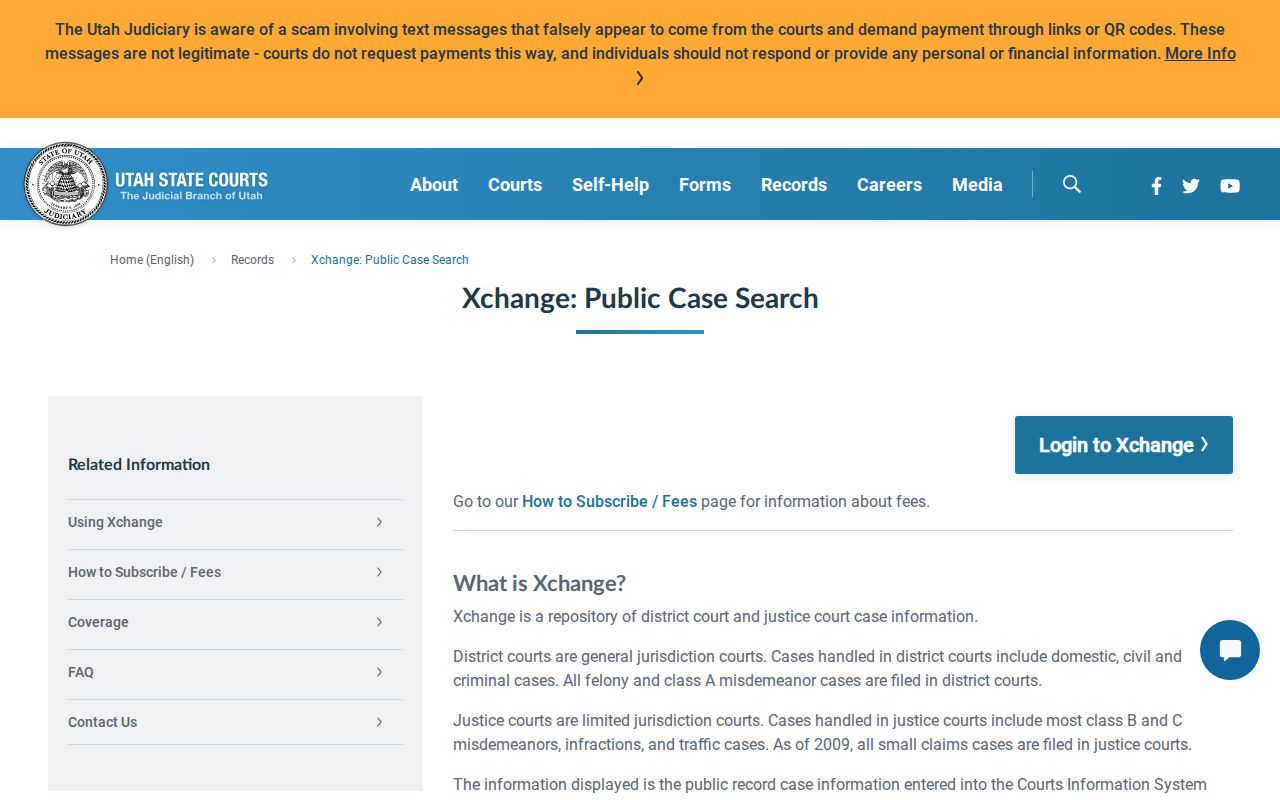
That overview is blunt on one point. Sealed, expunged, juvenile legal, and other nonpublic records stay out of the search service.
- Case history
- The dated register of proceedings and status fields.
- Document
- A filed paper or order linked to an event when public and imaged.
- Accounting
- Fine, fee, paid, due, or balance information where applicable.
- Certified copy
- A clerk-authenticated record obtained through the responsible court.
Two Ways to Search: County and State
Utah runs no separate Davis-only public database. Xchange is the statewide layer, and its scope control can limit results to Davis County or a specific court. For a record needing inspection, an unavailable document, or certification, local clerks and CORIS terminals are the county-level path.
| Channel | Best use | Limits |
|---|---|---|
| Xchange statewide search | Name, number, citation, public history, and some documents | Paid searches, result cap, and public classifications only |
| Davis court clerk | Inspection, unavailable documents, certified copies, classification questions | Must contact the court that owns the file |
| CORIS public terminal | In-person public case information without a home account | Same nonpublic limits; copying may cost |
| Written request | Clearly described records by mail, email, fax, or counter | Processing, copy, and staff fees may apply |
| MyCourtCase | Eligible parties viewing their own linked cases | Identity-controlled; not a general research portal |
The Utah State Law Library offers free public Xchange computers at its Salt Lake City location. Treat that as a statewide fallback, not a Davis courthouse.
Davis County Docket Coverage
The official coverage history traces CORIS and Xchange coverage for Bountiful, Farmington, and Layton to May 26, 1998. That milestone explains why older material may require a clerk search. Newer Davis County cases may still appear online.
District Court documents filed electronically since July 1, 2010 may be available, subject to processing and classification. Both dates are coverage markers, not promises that every filing has an image. When the history exists but the document does not, request it from the clerk.
Which Cases Stay Restricted
Xchange excludes sealed, expunged, juvenile legal, child-welfare, termination-of-parental-rights, and other nonpublic material. Private domestic files can show a partial public history. Financial information, protected data, or pleadings stay private. Payment, a subscription, or a courthouse terminal does not bypass those rules.
Utah Rule 4-202.02 classifies court records. Rule 4-202.03 permits access to public records while requiring legal authority for anything nonpublic. A qualified requester can file the written court-record request and attach supporting authorization.
No alternate-name workaround exists. If a Davis County case is absent, verify the court and spelling, allow for processing, and ask the clerk. Do not use third-party databases to evade a restriction.
Keep your notes lean. Hold onto the official case number, the court, the case type, the filing date, and any public event that matters to the docket entry. Leave out dates of birth, street addresses, and other private identifiers. Those details belong nowhere in a case lookup. A record this clean stays tied to the court docket itself and to a legitimate case or public research purpose.
Davis County Docket Search Scope
Search as narrowly as you can from the start. In Davis County, District Court and Justice Court dockets can both turn up the same name. So a Davis County docket search works best when your notice or citation tells you which jurisdiction issued it. That one detail filters out a crowd of strangers who happen to share a surname. If your first pass comes back broad, add a filing-date range. You can also add the official case type. Guessing at extra name spellings rarely helps and often muddies the court records.
Davis County Docket Search Wildcards
Spelling trips up name searches constantly. A wildcard on the first name lets a Davis County docket search catch variants like Bob and Robert, while the last name or company name must still match the original filing exactly. When the name is common, stack the search with court and date filters before trusting any result. Two safeguards matter here. Never publish a birth date you used to separate cases, and save only the court, case number, type, filing date, and each party's public role.
Davis County Docket Search Terminals
The courthouse CORIS terminal offers docket access in person. It obeys the same limits as Xchange. It will not open sealed files or exceed your classification. Ask the Davis County clerk when you need to inspect a document. The clerk can also help you find one the terminal does not show. One statewide fallback exists outside the county. The Utah State Law Library provides free Xchange computers for anyone willing to make the trip.
Davis County Docket Search Costs
Xchange is not always free. A Davis County docket search there can trigger per-transaction or subscription charges. So narrow the query before you submit it; that discipline also keeps you clear of the 500-result cap. The search fee covers the search itself, not every document linked to a case. Check the live checkout terms. Older help pages may quote pricing that no longer applies. Clerk copy and certification fees are billed separately.
Davis County Docket Search Documents
A listing is not the same as the paper. A Davis County docket search can name a document in the court record while never showing its image, so record the title and the event date, then call the clerk who owns the case. Do not mistake a printout for a certified copy. Classification still governs everything, and paying a fee never turns a private, protected, or sealed filing into a public one.
Davis County Docket Search Dates
Pick the right date field before you filter. The panel in a Davis County docket search can sort by filing date, disposition, judgment, or satisfaction. The choice should match the question you are actually asking. For an upcoming hearing, cross-check the docket result against the public calendar and the filed notice rather than relying on one screen. A docket entry that lists a date is not itself the outcome. If a setting looks off, call the court. The filed instruction, not the calendar listing, controls your duty to appear.
Davis County Docket Search Checklist
Verify before you trust any single line. For every Davis County docket search result, confirm the court, the case number, the case type, the filing date, and each party's public role, then read the full docket history before treating one entry as the case status. Missing record? Recheck your scope and spelling first. Allow time for processing, and direct your question to the clerk who holds the case. Whatever you do, skip third-party sites that promise to bypass Utah's access rules.