
How the Davis County Court Calendar Works
Utah gives the public more than one way to check a Davis County setting. The public Utah court calendar lets you search by party, case number, judge, or attorney. Date and location searches are there too. Full Court Calendars go further, adding location, judge, date, and attorney filters plus print controls. Both refresh on weekdays around 5:30 a.m. For case history, Xchange is the tool. For your legal duty, a summons, filed notice, minute entry, or judge's order governs.
A Davis County court schedule can reach Second District Court sites in Bountiful, Farmington, and Layton. Davis and city Justice Courts appear on it as well. Pick the actual court, not the city where something happened. The calendar shows no document images, and private or sealed matters may be missing. Treat it as a scheduling aid. When sources conflict, the court record wins.
Davis Calendar Location Filters
The official calendar landing page displays its search controls up front.
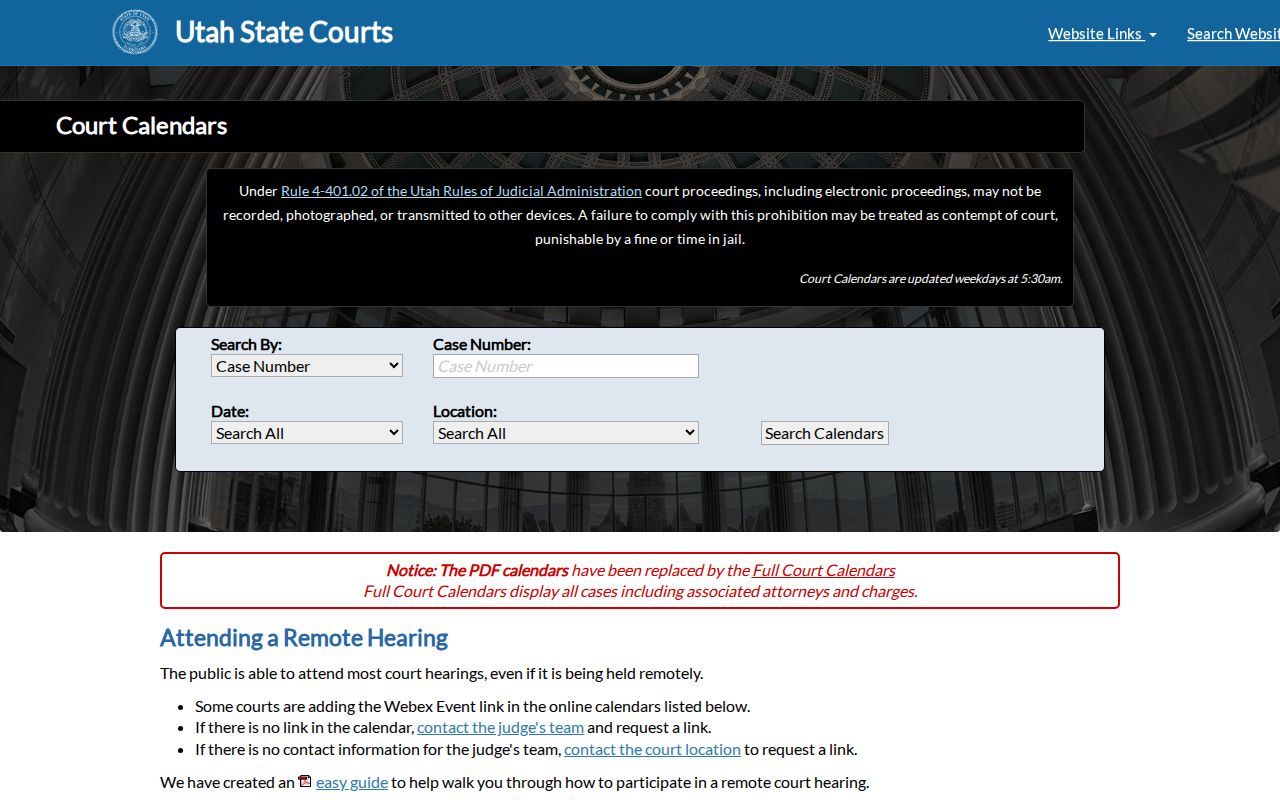
Location matters more than people expect. A case number alone does not pin down a court anywhere in the state. Use the court printed on your notice, then narrow the results by date or judge if you know them.
| Control | Use | Check |
|---|---|---|
| Case or party | Find a known matter | Official spelling |
| Judge or attorney | Narrow a docket | Current assignment |
| Date and location | Find a daily calendar | Correct court site |
Davis County Court Date Lookups
If one channel comes up short, try the next. A web calendar is fast, but only the responsible court can speak with authority about a moved or remote setting.
- Read the notice or citation for the court and case number.
- Search the public calendar by number, party, judge, attorney, date, or location.
- Compare the result with the Xchange case history and latest filed notice.
- Call the responsible clerk or judge team if a reset or Webex link is missing.
- Use the clerk counter or posted courthouse docket as the in-person fallback.
Phone works too. District Court numbers are Bountiful (801) 397-7000, Farmington (801) 447-3800, and Layton (801) 444-4300. Davis Justice Court sits at (801) 451-4488. An attorney can confirm a setting for a represented party. A written record request can retrieve an old notice. It is no substitute for live scheduling help.
Davis Full Calendar Controls
The Full Court Calendar interface shines when location, date, judge, or attorney is already known.
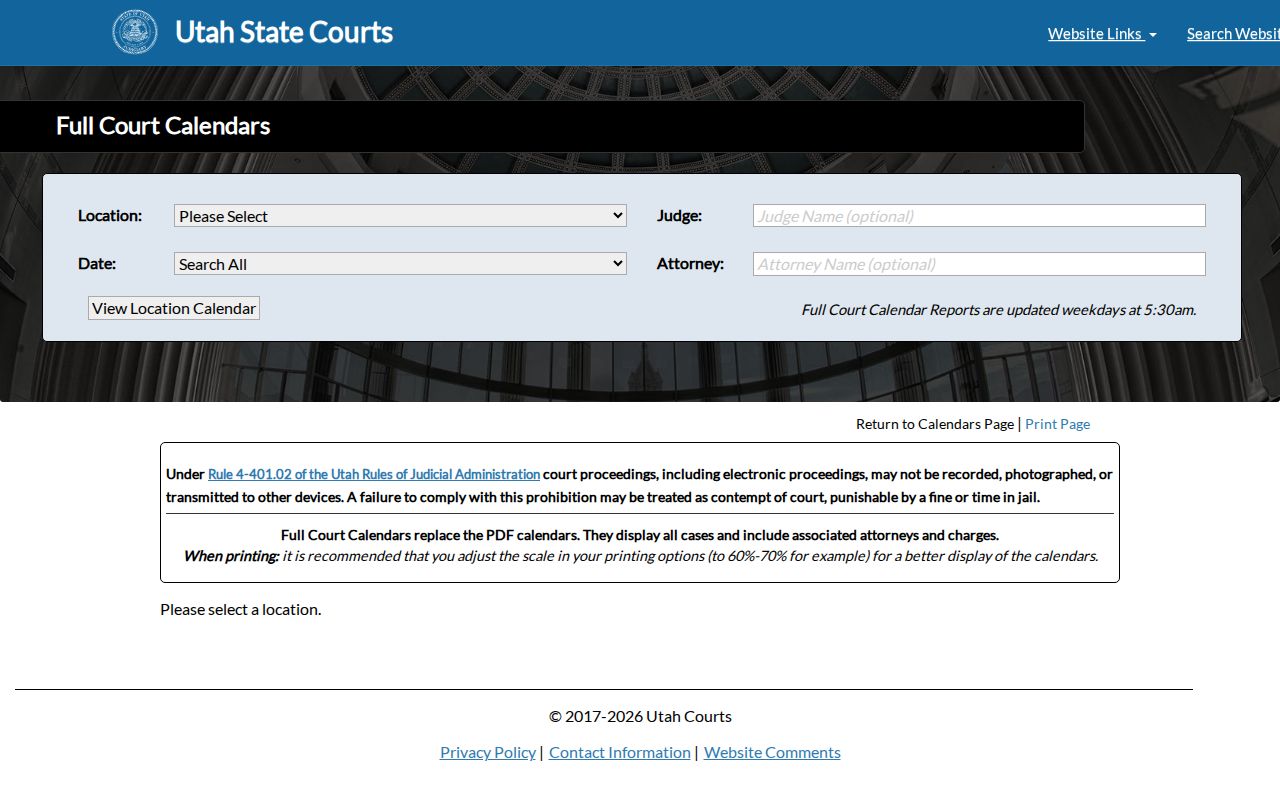
Its public rows sometimes list charges and attorneys. That detail helps you spot the right setting. Yet it cannot replace the case history or a filed order. Search and print controls make daily lists easy to carry. Updates run on the weekday cycle. A same-day change may still need a call to the court.
Court Settings: What Each Field Means
Never read a setting line halfway. A date without its court, hearing type, and current status can send you to the wrong place or the wrong event.
| Date | The scheduled calendar day, subject to a later order. |
|---|---|
| Time | The start time or docket-call time, not an estimate of completion. |
| Courtroom | The room, court site, or remote forum. |
| Judge | The assigned judicial officer for that setting. |
| Setting Type | Arraignment, pretrial, motion hearing, review, or trial. |
A proceeding label only tells you the purpose of one event. It says nothing about the outcome. An attorney name on the public calendar identifies counsel tied to that setting, not every lawyer who has appeared in the case.
Davis District and Justice Calendars
The official Davis District Court result view opens through the Utah calendar. View it directly rather than republishing private party details.
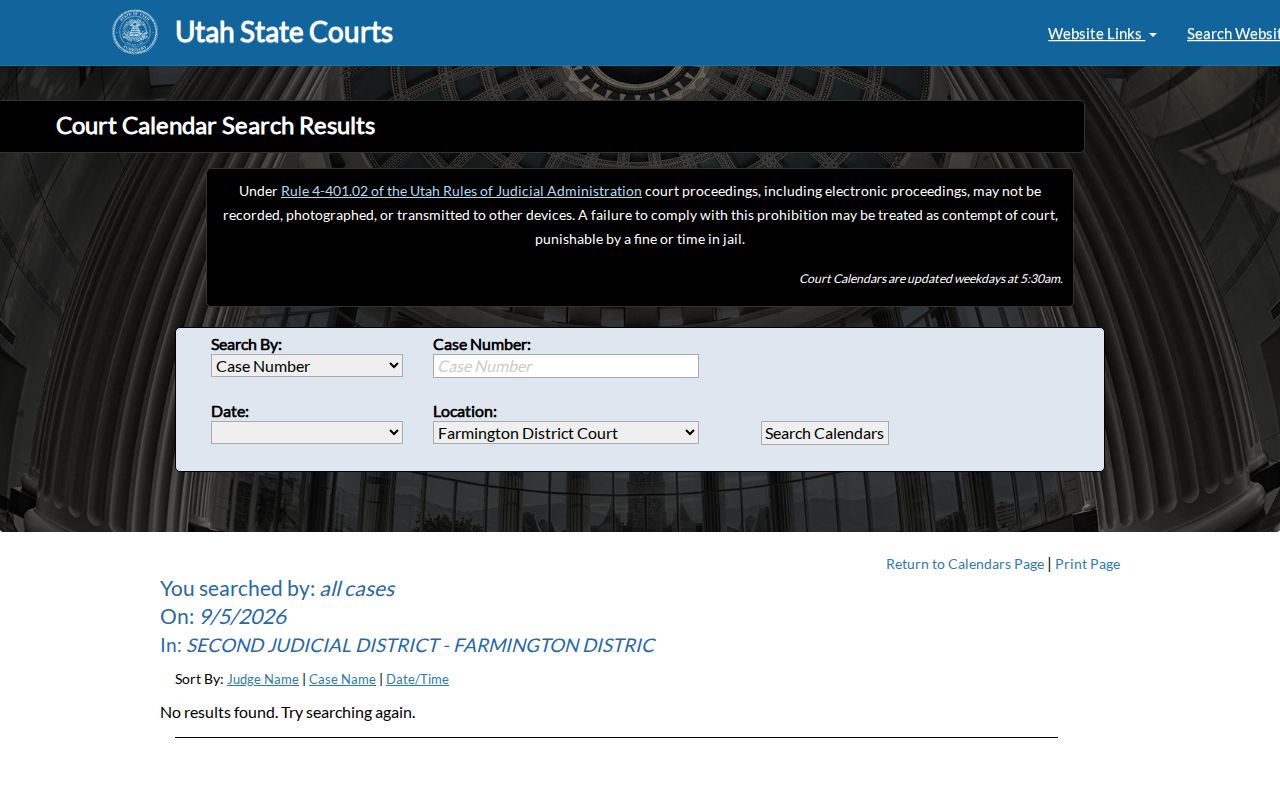
District Court takes felony, class A misdemeanor, broad civil, domestic, and probate matters. Justice Courts cover class B and C misdemeanors, infractions, traffic, ordinance matters, and small claims. The official Davis Justice calendar shows that separate location track.
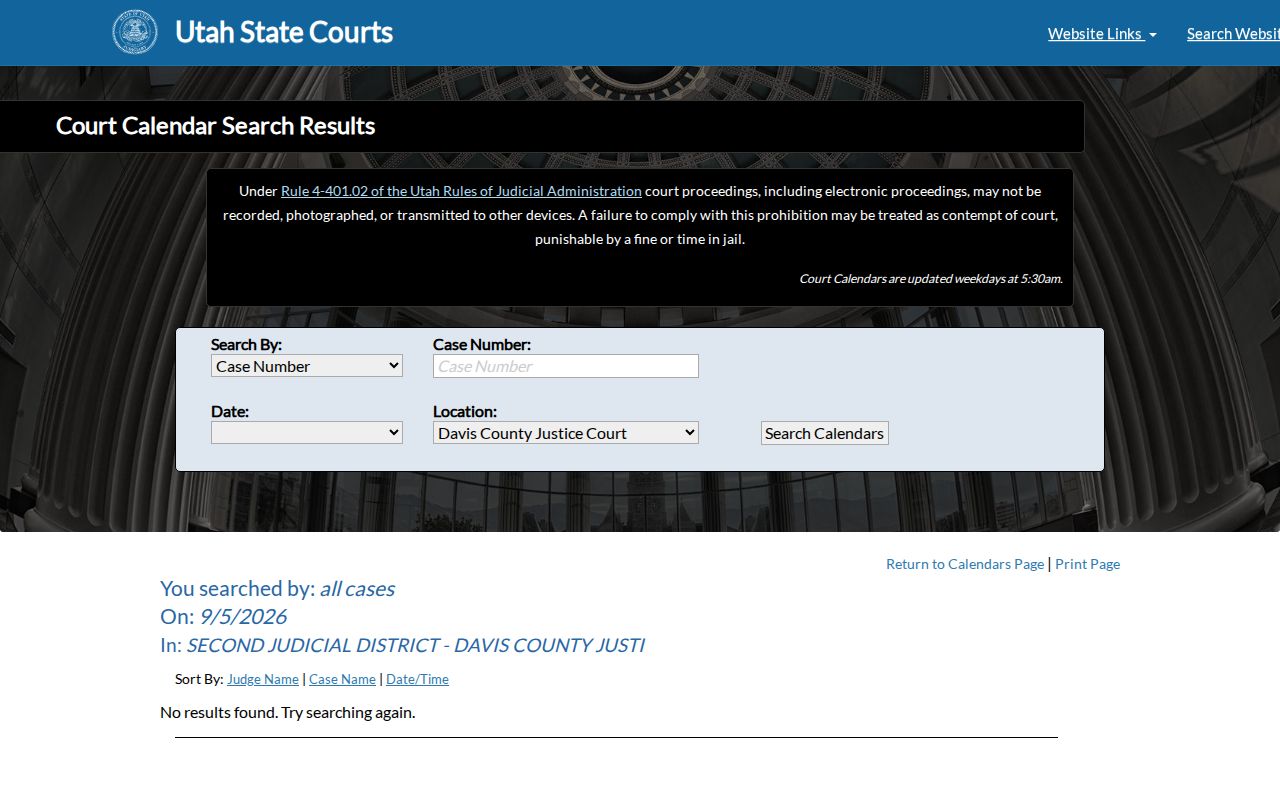
Match every result to the court named in it. A citation from a city does not mean city hall keeps that court docket. Kaysville, for instance, lists no separate Justice Court location in the official Davis directory. Syracuse, by contrast, publishes a current city court location. It differs from an older county directory entry.
Davis Court Setting Terms
Calendar wording runs terse. These terms describe what changed, without guessing why a judge acted.
- Setting
- A scheduled court event.
- Continuance
- An order moving the event to another date.
- Reset
- A replacement date entered after a change.
- Minute entry
- A court record noting what occurred at a proceeding.
- Remote hearing
- A setting held by an approved video or phone method.
A remote link may sit on the calendar or come from the judge team. Remote hearings are usually public unless restricted, but access directions vary case by case. Recording, photography, or transmission is barred without authorization under Utah Rule 4-401.02.
When a Davis Court Date Moves
Judges can continue or cancel hearings. Staff usually enter the new setting only after an order is filed. Check the chronological Xchange proceedings for a continuance, minute entry, notice, or replacement hearing. Then compare the public calendar. A row that vanished does not prove the case was dismissed.
Call the court location when your sources disagree. Ask for the current date, time, and judge team. Also ask the appearance method and whether a new notice went out. The clerk can give procedural information but cannot change a judge's order. A pending continuance request is not an approved continuance. Hold to the original setting until the court confirms otherwise.
Note: Recheck a Davis County court date near the hearing. Do this whenever a motion, reset request, or court contact has occurred.
Calendar, History, or Notice?
The calendar gives the fastest daily view. Xchange places the event inside the fuller court docket chronology. The filed notice or judicial order controls above all, so treat the three as layers: calendar for discovery, case history for context, latest official notice for compliance.
When sources differ: call the clerk or judge team shown for the Davis County court location and ask which setting is current.
A docket posted at the courthouse makes a decent arrival-day fallback. It still cannot override a filed order. Turn to a written request only when you need a copy of an older notice or calendar record, not when the pressing question is where to appear today.
Missed Settings and What Comes Next
Call the clerk and your attorney right away. Ask what the docket shows now. The judge may have entered a warrant, a default, a dismissal, or a new setting, and knowing which one shapes your next move. Clerks can read the entry to you and explain the next procedural step, though they cannot offer legal advice or undo any consequence.
Missed a setting? A failure to appear can lead to serious case-specific consequences, including a warrant in a criminal or traffic matter.
Do not assume online payment, a blank calendar, or a phone message resolves the missed event.
Seek legal advice when an order, warrant, bond term, or deadline may be involved.
Civil cases play out differently. A default or some other ruling may have been entered after a missed setting. Confirm the exact entry with whichever court actually holds the case. Was the missed hearing in Justice Court? Contact that local clerk directly. Do not go to a District Court counter just because both sit in Davis County.
Davis County Calendar Checks
Start by matching any Davis County court schedule entry to the filed notice. The location named in that notice is the one that governs. It controls a Davis County District Court setting. Note that the Bountiful calendar filter is separate from the Farmington and Layton filters. A Davis County Justice Court setting uses its own location choice. If the public calendar and Xchange disagree, the Davis County court clerk can tell you which entry stands. Remote hearings work the same way. Get the link from the judge team itself. A posted Davis County docket is only a fallback, since the latest order controls.